



Garmin Forerunner 70 Easy-to-Use Running Watch: Everything You Need to Know
The Garmin Forerunner 70 brings AMOLED style, advanced training tools, and serious running value to a lower price point. Here’s everything runners want to know before buying.
Garmin’s entry-level running watches have always appealed to runners who care more about consistent training than flashy smartwatch extras. But with the new Garmin Forerunner 70, Garmin has done something different. Instead of simply refreshing an affordable beginner watch, the company has brought a surprising number of meaningful training and recovery tools down into a much lower price category.
The result is a running watch that feels considerably more modern and capable than the older Forerunner 55 while still staying approachable for runners who want value and purposeful features—not unnecessary complexity.
Here’s everything you need to know about the Garmin Forerunner 70.
Watch Dave from Chase the Summit Compare Forerunner 70 & 170!
Garmin Forerunner 70 Release Date, Design, and First Impressions
Garmin officially announced the Forerunner 70 on May 12, 2026 alongside the new Forerunner 170.
At first glance, the Forerunner 70 immediately feels like a significant evolution from the Forerunner 55. The biggest visual change is the addition of a 1.2-inch AMOLED touchscreen display, which gives the watch a much more premium appearance than previous entry-level Forerunner models.
Importantly, Garmin didn’t abandon the physical button controls that runners rely on during workouts. The Forerunner 70 combines touchscreen navigation with Garmin’s traditional five-button setup, giving runners flexibility whether they’re training in rain, sweating heavily, or simply prefer tactile controls while moving.
According to DC Rainmaker’s early coverage, Garmin also cleaned up much of the overall user experience, making the watch feel more aligned with the company’s newer midrange and premium running watches rather than a stripped-down budget model.
For runners upgrading from older Forerunner devices, the difference should feel immediately noticeable.

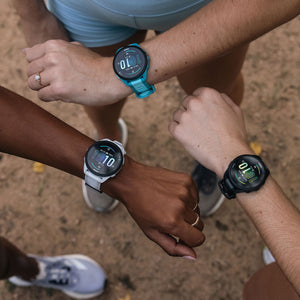
Garmin Forerunner 70 Price and Color Options
The Garmin Forerunner 70 launches at $249.99, positioning it as Garmin’s new affordable performance running watch with a 43mm case size.
Garmin is offering several color choices, including:
- Black
- Whitestone
- Tidal Blue
- Citron
- Soft Pink
- Cool Lavender
Garmin clearly put more emphasis on everyday wearability this time around. The Forerunner 70 still looks athletic, but it feels less utilitarian than older entry-level Garmin watches.
At $250, the watch occupies an interesting position in Garmin’s lineup. It’s no longer “cheap” in the traditional sense, but it now includes many training tools that previously required spending substantially more.
That shift makes the value proposition much stronger for serious runners who don’t necessarily need every premium feature.
Why the Forerunner 70 Is a Big Upgrade Over the Forerunner 55

The Forerunner 55 earned a loyal following because it was simple, reliable, and affordable. But over time, it also started to feel increasingly limited as Garmin added more advanced metrics and recovery tools to the rest of the Forerunner lineup.
The Forerunner 70 changes that in a major way.
Some of the most important upgrades include:
- AMOLED touchscreen display
- Training Readiness
- Training Status
- HRV Status
- Wrist-based running power
- Running dynamics
- Expanded workout guidance
- Additional sport profiles
- Improved wellness tracking
One of the biggest takeaways is that Garmin has effectively moved much of its modern training ecosystem into a lower-priced watch for the first time.
That matters because runners today increasingly expect their watch to help guide training decisions, not just record mileage.
At the same time, Garmin still kept clear separation between the Forerunner 70 and its higher-end watches. You won’t get advanced mapping, multiband GPS, or some of Garmin’s premium outdoor and smartwatch features.
But for many runners, those omissions will feel entirely reasonable at this price.
Garmin Forerunner 70 Battery Life
Battery life remains one of Garmin’s biggest advantages, and the Forerunner 70 continues that trend.
Garmin rates the watch for up to 13 days in smartwatch mode.
That’s especially impressive considering the move to an AMOLED display, which typically reduces battery life compared to older MIP displays.
For most runners, this means less charging stress and a better overall ownership experience. You can comfortably wear the watch around the clock for training, sleep tracking, recovery monitoring, and daily health metrics without constantly thinking about battery percentage.
For athletes training consistently throughout the week, that practicality matters.
Full battery specs look like this:
- Smartwatch mode: Up to 13 days (5 days always-on display)
- Battery Saver Smartwatch mode: Up to 28 days
- GPS Only GNSS Mode: Up to 23 hours
- All-Systems GNSS Mode: Up to 16 hours
Running Features That Feel Useful, Not Overwhelming

One of the smartest things Garmin appears to have done with the Forerunner 70 is focus on features runners are actually likely to use regularly.
Core running features include:
- Built-in GPS
- Wrist-based heart rate
- Daily Suggested Workouts
- Garmin Coach training plans
- Training Readiness
- Training Status
- Running Power
- Running Dynamics
- Recovery metrics
Garmin also introduced simplified workout creation tools designed to make structured training more approachable.
- New quick workouts simplify training by creating workout suggestions tailored to a runner’s fitness level and require minimal input to set up: just desired time and intensity level. Great for deciding on-the-go how you want to work out.
- Train for an event, achieve a milestone or improve fitness with Garmin Coach training plans that adapt daily based on health and recovery metrics. In addition to popular plans for more intense training, Garmin Run Coach provides new plans with run/walk workouts and lower volume training.
- Dial in with advanced training features powered by the Garmin Human Performance Lab, including training readiness, training status, wrist-based running power and running dynamics.
That balance is important. Many runners want meaningful training guidance without feeling buried under endless menus or advanced metrics they’ll never touch.
The Forerunner 70 seems designed specifically for that type of runner: someone who trains seriously enough to care about recovery and workout quality, but who doesn’t necessarily need ultra-endurance or expedition-level features.
The watch also supports a broad range of activities beyond running, including:
- Track Run, Treadmill, Road Bike, Walk, Cardio, Trail Run, Virtual Run, Indoor Track, Obstacle Racing, Ultra Run, Walk Indoor, Hike, Rucking, Mountaineering,
- Strength, Mobility, HIIT, Yoga, Pilates, Breathwork
- Pool Swim, SUP, Kayak, Row, Snorkel
- Bike (Outdoor), Bike Indoor, MTB, eBike, eMTB, Cyclocross, Gravel Bike, Bike Commute, Bike Tour
- Elliptical, Stair Stepper, Row Indoor
- Boxing, Mixed Martial Arts, Jump Rope
- Ski, Snowboard, XC Classic Ski, XC Classic Skate, Snowshoe, Ice Skating, Snowmobile
- Disc Golf, Horseback, Archery, Inline Skating, Soccer/Football, American Football, Basketball, Baseball, Softball, Volleyball, Cricket, Lacrosse, Rugby, Field Hockey, Ice Hockey, Ultimate Disc, Tennis, Pickleball, Padel, Racquetball, Squash, Badminton, Table Tennis, Platform Tennis
- Overland, Motocross, Motorcycle, ATV
Health and Fitness Tracking

Garmin continues to strengthen its wellness and recovery ecosystem, and the Forerunner 70 benefits from many of those improvements.
Health features include:
- Sleep tracking
- Sleep Coach
- Nap detection support
- HRV Status
- Body Battery
- Stress tracking
- Pulse Ox
- Recovery insights
- Morning Report
- Evening Report
- Daily Summary Report
- Weight tracking
For many runners, these tools have become just as valuable as pace or mileage data because they provide context around recovery and readiness.
Garmin’s ecosystem is particularly effective at tying these metrics back into training recommendations, helping runners better understand when to push harder and when to back off.
That integration gives the watch a more complete training feel rather than simply functioning as a GPS tracker.
In case you are wondering about sensor support, it does support the following: External HR (ANT+/Bluetooth), Footpod (ANT+/Bluetooth), Lights (ANT+), Cycling Radar (ANT+/Bluetooth), RD Pod (ANT+), Speed/Cadence Sensor (ANT+/Bluetooth), and Tempe (ANT+).
Everyday Smartwatch Features
The Forerunner 70 is still primarily a running watch, but Garmin included the smartwatch essentials most runners actually care about.
Features include:
- Smart notifications
- Safety and tracking tools
- LiveTrack
- Touchscreen controls
- Calendar and weather widgets
- Large/Small font switching
- Photos in text (Android only)
Notably absent are onboard music storage and Garmin Pay, which Garmin reserves for the more expensive Forerunner 170.
That separation feels intentional. Garmin appears to have focused the Forerunner 70 on delivering strong training value rather than trying to compete directly with full-featured smartwatches.
Heart Rate and GPS Accuracy Expectations
Based on Garmin’s recent sensor performance and DC Rainmaker’s early impressions, the Forerunner 70 should deliver reliable accuracy for the vast majority of runners.
The watch uses Garmin’s Elevate optical heart rate platform (V4 HR sensor version; latest is V5) and supports modern training metrics like wrist-based running power and HRV tracking.
GPS performance should also be dependable for road running, general fitness tracking, and most outdoor workouts.
It’s worth noting that virtually every reviewer agrees that Garmin beats almost every other multi-band/dual-frequency unit on the market.
Garmin does reserve multiband GPS for higher-tier watches, so runners frequently training in dense city environments or highly technical trail terrain may still benefit from stepping up to more expensive models.
But for most runners, the Forerunner 70 appears positioned to provide very solid real-world performance.
Garmin Forerunner 70 vs Garmin Forerunner 170
The Forerunner 170 builds directly on the Forerunner 70 platform but adds several premium convenience features.
Compared to the Forerunner 70, the Forerunner 170 adds:
- Garmin Pay
- Music storage options
- Barometric altimeter
- Compass
- Additional outdoor activity support
The two watches share much of the same core training and recovery experience, which is important because it means buyers aren’t forced into the higher-priced model simply to access Garmin’s modern running metrics.
For many runners, the Forerunner 70 may actually represent the better overall value.
If your primary focus is running performance, training guidance, battery life, and recovery tracking, the Forerunner 70 covers the essentials extremely well.
For $50 to $100 more (for Music model) the Forerunner 170 makes more sense for runners who want additional smartwatch convenience features or more advanced outdoor tracking tools.
Who Should Buy the Garmin Forerunner 70?

The Garmin Forerunner 70 feels designed for runners who want a serious training watch without paying premium-watch prices.
It makes a lot of sense for:
- New runners who want room to grow
- Recreational runners training consistently
- Runners upgrading from older Forerunner models
- Athletes who value battery life and simplicity
- People who want meaningful training tools without unnecessary extras
Most importantly, the Forerunner 70 feels focused.
Rather than trying to become everything to everyone, Garmin seems to have concentrated on delivering the features runners genuinely use most often: reliable tracking, actionable recovery insights, strong battery life, and practical training guidance.
For value-conscious runners who still want a modern Garmin experience, that combination could make the Forerunner 70 one of the company’s most compelling watches in years.